Justin Facing a Wall of Troubles. Can he Surmount Them?

Patrick Gossage • May 26, 2023

The wonderful gentleman and ex-Governor General Donald Johnston, rather than providing Justin Trudeau with a clear credible path to unravelling the critical questions of China’s long term organized interference in our democracy, has instead handed him a cauldron of new troubles, not the least of which is whether the PM made a major mistake in nominating a man he knew well for decades to unravel the China mess in the first place. 
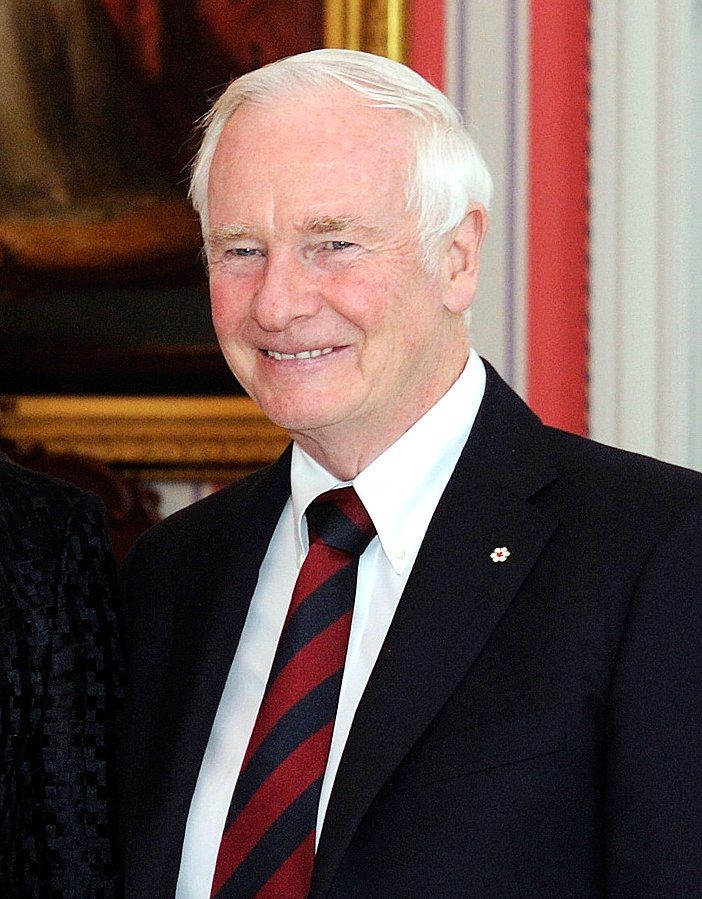
This is how bad politics has become in Canada. The future of the universally desired Public Inquiry has hit a brick wall. The PM’s complete trust in Johnston’s judgment that to hold a Public Inquiry would be useless, has been rejected, perhaps unfairly,  by all opposition parties and goes against the clear desire of the House. 


Who will blink? Certainly not the leader of the Opposition who has simply repeated ad nauseam that he has no confidence in Trudeau’s

conflicted “ski buddy”. The other two opposition parties are equally firm in their preference for a public inquiry. 


Certainly Johnston’s report appears in its exoneration of the government’s failure to act decisively on the China threats, as a “whitewash”. It does give credence to the claim by the PM and Ministers that they did not see some of the more damaging briefings that were leaked since he found the system for briefing he found to be seriously flawed. But there is still uncertainty about which PMO Security advisor to the PM did or did not brief him on several key threats to MP’s.  These are the kind of questions that could be answered under oath in an inquiry. They are not unimportant. 


In any case it is clear through many detailed reviews of the longstanding threats that the Chinese represented. The most thorough was by Andrew Coyne in late May before the release of Johnston’s report. He reminded us of the past love affair with doing business and making money in China. Justin was promoting a trade agreement with China up until the two Michael were incarcerated in response to our decision to extradite Huawei executive Meng Wanzhou on behalf of the US. 


“Few could claim to be genuinely surprised,” he wrote “by what has emerged over the past few months of reporting by The Globe and Mail and Global News even if it was based on top-secret intelligence. What was shocking was rather the scale and scope of it: a broad, deep and unrelenting campaign of interference in Canada’s political, economic and social life, going back years.” And one of the leakers in a Globe piece wrote of his absolute amazement at the lack of action on these revelations by the government. 

Justin was full of answers concerning the two committees he set up to examine foreign interference, but it is demonstrable that in fact little was done – through ignorance? We are to believe the PM and Ministers did not see key briefing notes? An inquiry could get to the bottom of this serious gap in responding to real interference by a well-organized foreign power. 


Johnston was quick to criticize the leakers and the media who broadcast sometimes “incomplete” and sometimes inaccurate readings of secret briefing materials. This tactic is a major misjudgment on Johnston’s part and will only and inevitably prompt further -enthusiastic coverage and new angles.

As for Justin facing up to a Johnston suspected as having a conflict of interest continuing an unpopular course with public hearings, he may be forced to find a way to mount an inquiry which would exclude Johnston.  Perhaps Johnston will resign, opening the way for Justin to rejig a situation which could be very damaging to him in the long run.   


This ongoing issue and the somewhat smug way it was handled does not improve the PM’s likeability, nor the trust of many Canadians in his basic judgment. Too bad. An inquiry could still sweep this issue away for months while we all got bored by the myriad intricacies of intelligence gathering and distribution. It could include a look into the widespread fear of the Chinese diaspora of the Communist regime – this would be good and an aspect worth retaining from Johnston’s proposed public hearings.   


It is worth noting that Poliviere’s rabid personal attacks on Johnston have done him little good. Johnston’s long relationship with the family might have raised red flags in the PMO before he was appointed. The appearance of conflict given his conclusions is enough to make his future involvement in the issue a continuing problem for the government. 


As for its impact on the next election, there is a quote used by Biden that could apply to Trudeau: “Don’t compare me with the almighty, compare me with the alternative.”

Patrick Gossage Insider Political Views
By Patrick Gossage April 14, 2026
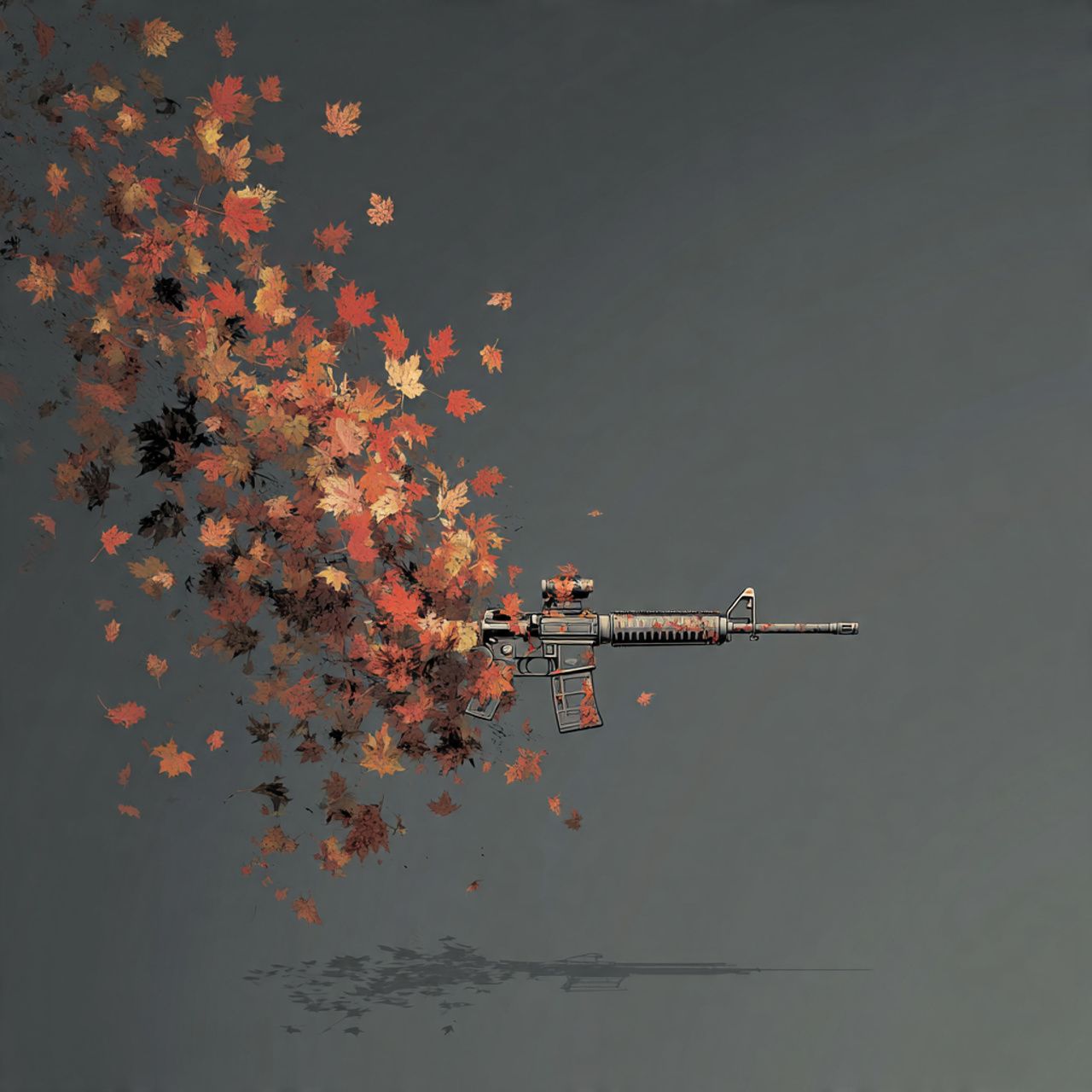
In contrast to US inaction after almost weekly mass killings, it took one horrible shooting rampage at the Ecole Polytechnique in Montreal, in 1980, to start the drive for public policy changes around gun control. But years delays between the mass shooting outrage and actual policy to rid the country of assault rifles doomed the eventual gun buyback program. The polytechnique horror was huge news in our relatively massacre-free nation. That December day, 25-year-old Marc Lépine stalked the hallways and classrooms of the École Polytechnique de Montréal with a semi-automatic rifle and murdered 14 women and injured another 13 people before killing himself. A year later, the Coalition for Gun Control was formed to push for stricter gun laws, led by survivors of the Montreal massacre. Later that year, the federal government passed Bill C-17, which imposed safety training and a mandatory waiting period to get a firearms licence-- not an effective means of controlling automatic rifles. Much later, in1996, Parliament passed the Firearms Act, Bill C-68, driven in part by a push for stricter gun laws following the Montreal massacre. The act created a national firearms registry and imposed new rules for obtaining a gun licence, including background checks. The former Conservative government, under prime minister Stephen Harper, abolished the long-gun registry, which it said placed an unnecessary burden on law-abiding gun owners. Quebec subsequently created its own provincial registry to replace it. It took another horrific killing nine years later in Nova Scotia to force Ottawa to take real action on miliary-style guns. On April 18 and 19, 2020, 51-year-old Gabriel Wortman committed multiple shootings and set fires at 16 locations, killing 22 people before he was killed by the RCMP. On May 1, 2020, Prime Minister Justin Trudeau, following through on a 2019 campaign promise, announced an immediate ban on some 1,500 makes and models of assault weapons.. The Canadian government sought to follow New Zealand's lead when at the same time it announced the ban it promised a plan to force gun owners to surrender military-style firearms. But while New Zealand acted quickly, in 2019, Ottawa only launched a long awaited buyback program in 2026. In contrast, the government of then New Zealand Prime Minister Jacinda announced its firearms buyback program shortly after a white supremacist killed 51 people at two mosques in Christchurch in March, 2019. In order to move quickly, New Zealand set up mobile units where firearm owners could get refunds in exchange for their firearms. They worked hard to get co-operation from gun owners. Meanwhile, here, the firearms industry and individual gun owners vigorously opposed the project, and it was delayed for years. The program was finally initiated this year with little of the sense of urgency it could have had right after the Nova Scotia killings. It has not been going well. In April, the federal public safety minister's office said more than 67,000 assault-style firearms have been declared by 37,869 firearm owners across Canada. That's just under half of the 136,000 firearms the government had budgeted for when it set aside aside $248.6 million for the program. The precise number of banned firearms in Canada is unknown due to the end of the long-gun registry in 2012. There are other deeper problems. Alberta, Saskatchewan, and Manitoba have indicated they will not assist with the program, meaning police are not co-operating as in New Zealand. Conservative MPs and firearm owners say the buyback is a wasteful exercise that targets law-abiding citizens. The original gun-control advocacy group, PolySeSouvient, blames “weak political leadership” for what it calls “poor participation” in the compensation program. It looks like Ottawa - to put it mildly - has blown the opportunity to really reduce the number of people-killing guns in this country.
By Patrick Gossage March 12, 2026
One of the major differences between these two men is that Carney understands the value of well-thought-out strategy, abundantly clear in his Davos speech, which laid out one for middle powers to deal with the end of a rules-based international order and the rise of hegemony. Trump's lack of strategic understanding is clear in his bumbling attempts to justify the billion-dollar-a-day Iran war. His overall tactic of “flooding the zone” – mounting a new initiative or major announcement every day, or even several times a day to ensure press and opposition can never catch up. This tactic has served him well – confusing the world and his would-be opponents into submission under a valley of activity and harsh opinions from the leader of the world. Contrast this approach to leadership from Carney. He is systematically building a nation less dependent on US trade by travelling the world building new alliances and trading partners. And in the scare of Australia giving substance to his idea of alliances with middle powers. All laid out in the Davos speech. It is instructive to appreciate how much Trump was irritated by the Davos speech. Carney got a standing ovation; Trump’s rambling lengthy diatribe did not. He won’t soon forget being so upstaged. He surely recognized an intellectual power he could never match. Carney is a realist and pragmatic when he stated recently “We take the world as it is, not as we wish it to be.” He is dealing with the world that is being reshaped by an irrational power-mad president, a world the powerful Stephen Miller said “that is governed by strength, that is governed by force, that is governed by power. These are the iron laws of the world.” Does Carney sometimes err on the side of supporting Trump likely to ensure that critical talks on free trade and tariffs have some chance of finding a sympathetic ear? Yes; first he seemed to fully support Trump’s war with Iran. He later made his support more nuanced, saying Trump’s actions were against the rules-based international order. He now says we will not get involved unless a NATO ally is threatened. But generally, Carney is highly rational in contrast to Trump’s self-centered irrationality. Take Trump’s bizarre ill-informed letter to the Prime Minister of Norway, who had no role in deciding if he got the Nobel Peace Prize: “I no longer feel obligated to think purely of Peace (he subsequently engaged in an ever expanding war against Iran). He then reiterated his demand for “complete and Total Control, of Greenland. Thank you!”. His late-night rants, complete with caps, on social media show a mind out of control. Thay are dutifully reported on US news media and often astonish with their non sequiturs and nastiness. One of his more unpresidential quotes came as he fingered White House drapes: “I chose these myself. I always liked gold." The big question for Canadians who are more and more disillusioned with the antics of the President: could these two opposite ever sit down and do a deal that works for Canada. The two do text, and Carney has admitted that in private Trump does listen. But there is also evidence that the trade people in the White House do not like Canada, and as Trump has said, we owe our very existence to the US. And we are “difficult”. They have said that the current trade deal is not good for the US and could be trashed entirely and -deals with Mexico and Canada could be separate and the current trilateral deal may be dead.  Canada was at the brink of reducing the heavy sectoral tariffs on steel, aluminum, and lumber when Premier Ford’s unfortunate ads during the Rose Bowl that featured President Reagan speaking against the usefulness of Tariffs led To Trump suspending talks. They only recently resumed. So can our world-renowned businessman and banker hope to sit down with the unpredictable and unstable President and cut a deal? Some hope that if we extend talks, the President, weakened by the midterms, the bad economic fallout from an unpopular war, and the fragmentation of the MAGA movement may be easier to deal with. On the other hand he may badly need a “win,” bullying big concessions out of Canada and reaping so-cabled benefits from a weaker free trade deal. There is a scenario where Trump gets a black eye if Carney simply walks away with the conviction, perhaps easily shared with an increasingly nationalistic and confident Canada that “no deal is better than a bad deal.” In any case, what a decisive and challenging future we face with Canada at play. Can Carney win for Canada against his opposite by losing a deal?"
More Posts